The One Word on a Cinnamon Label a Pharmacist Says Daily Users Miss
Silverwell Notes editorial team · Figures from European food-safety agencies
Every morning, Carol, 67, stirred a heaping teaspoon of cinnamon into her oatmeal. She had read it was good for blood sugar, and she liked the taste. Then, at a routine refill, her pharmacist asked a question she had never heard: "Which cinnamon?"
Two spices, one name
There are two main kinds of cinnamon on store shelves. Most of what Americans buy is cassia, inexpensive, strong-smelling, and the default in supermarket jars. The other is Ceylon, sometimes called "true cinnamon," lighter in color and flavor.
They look almost the same once ground. Chemically, they are not. ### The compound you have never heard of
Cassia is naturally rich in coumarin. Austria's food-safety agency measured between 1,880 and 3,260 mg of coumarin per kilogram in cassia cinnamon, and at most 185 mg/kg in Ceylon. That is roughly a hundred times less.
Why does it matter? Europe's food-safety authority set a tolerable daily intake for coumarin of 0.1 mg per kilogram of body weight, based on liver studies. Germany's Federal Institute for Risk Assessment did the math: a 60 kg adult reaches that limit with about 2 grams of average cassia a day, roughly one teaspoon. Carol was taking more than that, every day.
"Not dangerous once, but every day adds up"
A single sprinkle on toast is not a concern. The issue is daily, long-term use at a dose people pick for its health benefits, which is exactly what many readers over 55 are doing.
The word to look for
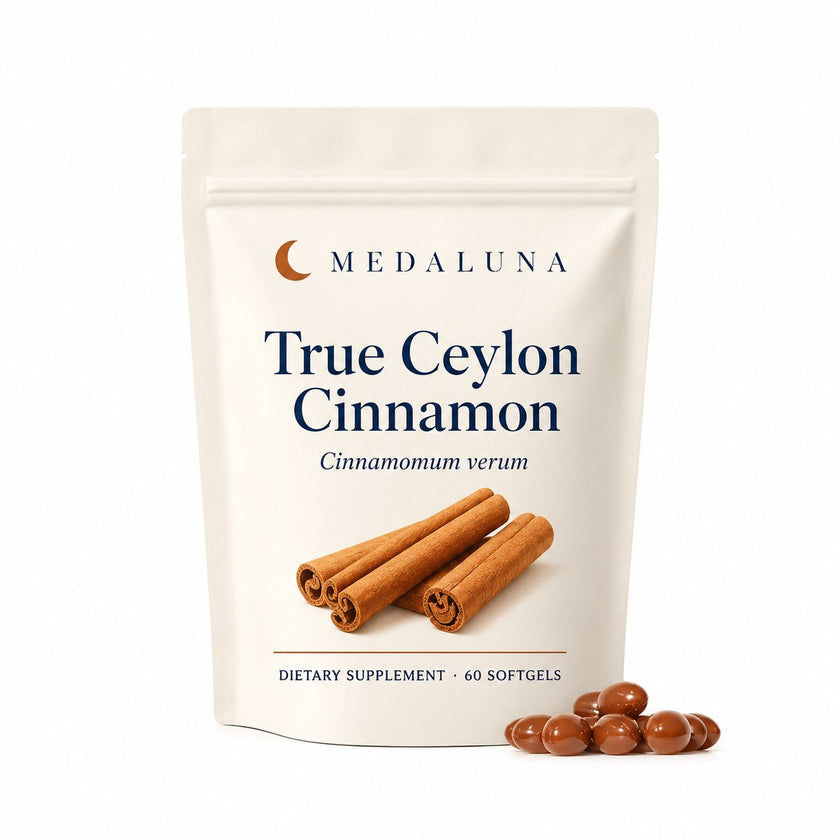
On any cinnamon you take daily, look for one word: Ceylon (or its botanical name, Cinnamomum verum). If the label says only "cinnamon," it is almost certainly cassia.
Carol switched to a Ceylon cinnamon capsule. Same daily habit, a fraction of the coumarin, no teaspoon to measure.
See Medaluna Ceylon Cinnamon →Anyone with liver concerns or on medication should talk to a doctor or pharmacist before taking any supplement. These statements have not been evaluated by the Food and Drug Administration. This product is not intended to diagnose, treat, cure, or prevent any disease. "Carol" is a composite illustration, not a real customer.