The 2 PM Crash After 50 Is Often a Blood Sugar Signal, Not a Coffee Problem
Silverwell Notes editorial team · Based on published research
Mark, 58, runs a small hardware store. Mornings are fine. Lunch is a sandwich at the counter. And at two o'clock, every single day, his eyes start closing in front of the register. For years he blamed age, then sleep, then the sandwich. Mostly he reached for a third coffee.
What Mark felt has a simple explanation, and it is not always caffeine-shaped.
What happens after lunch
A meal built on bread, rice, pasta or chips sends blood sugar up. Insulin brings it back down. When the rise is steep, the fall is steep too, and the body reads that drop as a reason to slow down. The result is the heavy-eyed, foggy hour most people over 50 know well. Coffee hides it for a while; it does not change the curve.
Where cinnamon comes in
Researchers have tested cinnamon on blood sugar for years. A 2023 review of 24 controlled trials found a significant reduction in fasting blood sugar in adults with type 2 diabetes. A 2025 review covering 21 meta-analyses reached a similar conclusion, with some results still debated. Most of these trials were in people with diabetes, so the honest takeaway is modest: cinnamon may help the body keep a steadier curve around meals.
A steadier curve is exactly what the 2 PM crash is missing.
Choose the right cinnamon
If cinnamon becomes a daily habit, the type matters. Common supermarket cassia is rich in coumarin, which European food-safety agencies advise limiting; about one teaspoon a day already reaches the tolerable limit for a 60 kg adult. Ceylon cinnamon contains roughly a hundred times less.
Mark's lunch, now
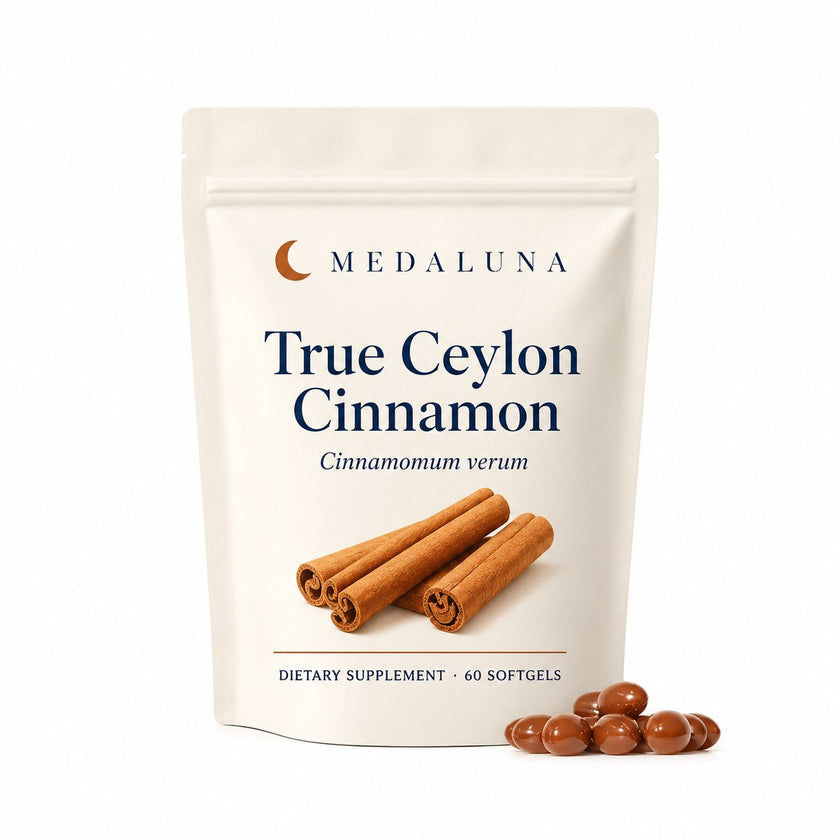
Mark kept his sandwich. He added a short walk to the bank after eating, and one Ceylon cinnamon capsule with lunch. "I still have coffee," he says. "But I'm not fighting my own eyelids at two anymore."
What to expect, honestly
- First days: take it with lunch, every day, so the habit sticks.
- First weeks: jot down how your 2 PM feels, once a day. Your own notes are the only honest measure.
- After a month: compare. If you notice nothing, stop; the 90-day guarantee covers it.
A small, steady habit
Ceylon cinnamon is a food supplement, not a medicine. Anyone on blood-sugar medication, or with liver concerns, should talk to a doctor or pharmacist before adding any supplement.
See Medaluna Ceylon Cinnamon →These statements have not been evaluated by the Food and Drug Administration. This product is not intended to diagnose, treat, cure, or prevent any disease. Individual results vary. "Mark" is a composite illustration, not a real customer.